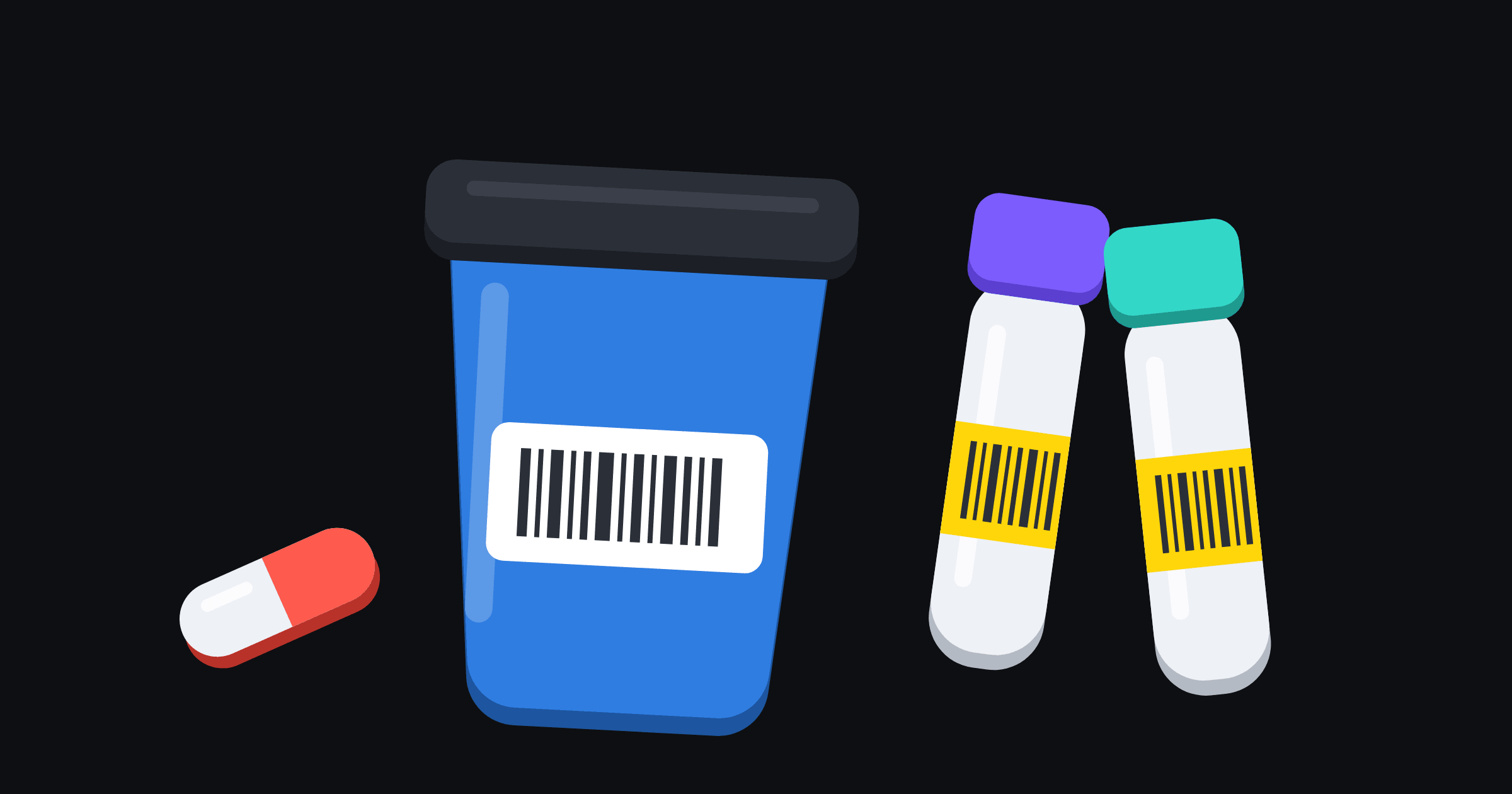
NCAA drug testing is a urine test, given year round and at NCAA championships, that checks for eight classes of banned substances. You are picked at random or by things like your sport, position or playing time. An official watches you give the sample, which is split into an A and a B vial. The lab tests them without ever seeing your name.
NCAA drug testing at a glance
| Question | Answer |
|---|---|
| Who can be tested? | Every athlete with NCAA eligibility left, including injured athletes and athletes in the transfer portal |
| When? | Year round in Divisions I and II, and before, during or after NCAA championships and postseason football games |
| How much warning do I get? | Often very little. At a team championship, you have one hour to report after you are told |
| What do they test? | Urine, for eight banned classes. Championship tests add stimulants, like caffeine |
| What if I skip it? | It counts as a positive test |
| What does a first positive cost in Division I? | One full season withheld, at least 365 days ineligible, and a negative test before you play again |
| Can a supplement make me fail? | Yes. The NCAA says athletes have lost eligibility this way |
Do I have to agree to be tested?
Yes. Every academic year you sign an NCAA drug testing consent form. If you do not sign it, you cannot practice or compete in any sport.
In Division I the deadline is before your first practice or competition, or the Monday of the fourth week of classes, whichever comes first.
Who gets picked for an NCAA drug test?
Every NCAA school is part of the program. The NCAA's 2026 to 27 Drug Testing Manual says athletes can be picked in two main ways:
- Year round testing. Athletes in Division I and II sports can be tested at any point in the year, including summer. Selection can be random, or based on sport, position, competitive ranking, athletic scholarship status or playing time.
- Championships. Every athlete at an NCAA championship or postseason football game can be tested, from any division. That includes athletes in their final year and athletes who did not play.
Being hurt does not take you off the list. The manual names athletes with season ending injuries and athletes who have entered the transfer portal as still subject to testing. You come off the list only if you have left the team, graduated, used up your eligibility, withdrawn from school, or have a career ending medical waiver. Your school also has to tell the testing agency before the test date.
Some athletes can be tested again at any time: anyone who has tested positive, had an atypical (unusual) result, or given more than one dilute sample at a testing event.
How much warning do you get?
Less than most athletes expect.
- On campus, year round: the testing agency tells your athletic director no earlier than two calendar days before testing. Your school then tells you in person or by phone when and where to report, and you sign a notification form.
- Off campus, year round: schools may get no advance notice.
- Team championships: your school is told no earlier than two hours before the game. After the cool down, a testing official tells you that you were picked, and you have one hour to report.
- Individual championships: schools are not told ahead of time whether testing will happen. A courier walks you to the testing room, which may be right away, after your last event of the day, or after your last event of the championship.
What happens in the testing room?
The NCAA's testing agency is Drug Free Sport International. Its doping control officer (the trained official who runs the test, called the DCO) follows the steps set out in the manual. Here is a test day, step by step:
| Step | What happens |
|---|---|
| 1. Check in | Your identity is checked. For on campus tests you show a photo ID, and a school staff member is there to confirm who you are |
| 2. Pick a cup | Choose a sealed collection cup and put a unique barcode on it |
| 3. Give the sample | Rinse and dry your hands. The DCO watches you give the sample, and you keep the cup closed and with you |
| 4. Dilution check | The DCO checks the specific gravity of the urine (a measure of how concentrated it is) in front of you |
| 5. Split and seal | The DCO splits the sample into an A vial and a B vial and seals each with barcodes you picked |
| 6. Sign | You and the DCO sign a form confirming the steps were followed |
A few details athletes ask about:
- Your name never goes to the lab. The vials carry only barcode numbers, with no name or school.
- No phones recording. Audio or video recording of any part of the collection is not allowed.
- Drinks in the room are controlled. Your school may offer food and drinks, but only caffeine free, alcohol free, sealed products with no banned substances.
- If you cannot go yet, you wait. With a partial sample, you stay in the room with your closed cup until you can finish.
- Too diluted means you stay. If your sample is too diluted, it is not sent to the lab and you stay until you give one that is not. Giving more than one dilute sample can get you tested again at any time.
- Class can come first. If an academic obligation clashes with your testing time, you can ask the DCO to reschedule.
If you think a step was done wrong, say so. The DCO must write it down and ask you for another sample.
What happens if you skip or leave the test?
Do not do it. Not showing up without a legitimate reason, failing to give a sample, leaving the room before you are cleared, or trying to change the sample is a "breach of protocol". It is treated as a positive test.
Tampering, like swapping in someone else's urine, is worse. In Division I it costs two seasons and at least 730 days of eligibility.
What does the NCAA test for?
The NCAA bans eight classes of substances:
- Stimulants (like caffeine, and ADHD medicines such as Adderall)
- Anabolic agents (muscle building substances)
- Beta blockers (banned for golf and rifle)
- Diuretics and masking agents (drugs that flush water out or hide other drugs)
- Narcotics (strong painkillers)
- Peptide hormones, growth factors and related substances
- Hormone and metabolic modulators
- Beta 2 agonists (some asthma medicines)
The list is not complete. Anything chemically or pharmacologically related to a banned class is also banned, even if it is not named. Our NCAA banned substances guide goes through each class supplement by supplement.
What gets tested depends on the event. Year round tests generally look for anabolic agents, hormone and metabolic modulators, diuretics and masking agents, and peptide hormones. Championship tests also include stimulants, narcotics, beta 2 agonists, and beta blockers in rifle and golf. The NCAA can test for any banned substance at any time, though. That is why caffeine, which counts as positive at 15 micrograms per milliliter of urine or more, matters most in championship season.
What about cannabis? The 2026 to 27 NCAA list does not include cannabinoids as a banned class. Your school and conference can still have their own policies, and your school may run its own drug testing program, separate from the NCAA's.
What if you take a prescription medicine?
Tell your athletics medical staff before you are ever tested. The NCAA asks athletes to report every medication, prescribed or over the counter, to their athletics health care provider.
The NCAA allows medical exceptions for athletes with a documented medical need for a banned substance. How it works depends on the class:
- Approval first: for anabolic agents, hormone and metabolic modulators, and peptide hormones, the NCAA must approve the medicine before you practice or compete while taking it.
- On file, used after a test: for stimulants (including many ADHD medicines), beta blockers, beta 2 agonists, diuretics and narcotics, your school keeps your doctor's documentation on file. If you test positive, the school sends it in, and it has two business days to tell the testing agency it will.
The NCAA also says to look at non banned medicines with your doctor before asking for an exception. Never stop a prescribed medicine on your own: talk to your doctor and athletic trainer.
What happens after the lab gets your sample?
The lab is a World Anti-Doping Agency accredited lab chosen by the NCAA. It tests part of the A sample first. If the A sample shows a banned substance:
- Your school is told, and told that the B sample will be tested.
- You can choose who is present for the B sample test: you, someone on your behalf, or a lab stand in. The seal is checked before it is opened.
- Your eligibility may stay in place until the B sample is confirmed positive.
- If the B sample is positive, the lab finding is final, with no further analysis. Your school declares you ineligible and holds you out of all competition.
For individual championships, the testing agency reports positive results to schools within 45 days of the test, barring delays.
Can you appeal a positive test?
Yes, through your school. After a positive B sample, you ask your school to appeal, and it must notify the testing agency within two business days. You stay ineligible while the appeal runs.
At least three members of an NCAA committee review the appeal in writing, and they can move it to a hearing by phone. If the appeal is granted, you still need a new negative test before you can compete. The committee's decision is final.
What does a positive test cost?
These are the Division I penalties in the 2026 to 27 Division I Manual. If you compete in Division II or III, ask your compliance office for your division's penalties.
| Situation | Division I penalty |
|---|---|
| First positive, any class but narcotics, or a breach of protocol | Withheld from one full season of regular season competition, and ineligible for 365 days from the test and until you test negative |
| Second positive, any class but narcotics | Lose all remaining eligibility in all sports |
| First positive for narcotics | Ineligible for 50 percent of a season in all sports, and until you test negative |
| Tampering with a sample | Two seasons withheld, and ineligible for 730 days and until you test negative |
The penalty follows you if you transfer. Your old school must tell your new one.
How do you get eligibility back?
You must pass an NCAA drug test for every banned class. Your school requests this exit test no sooner than six weeks before your penalty ends, and the testing agency schedules it within two to four weeks. Your school pays for it.
Can a supplement make you fail an NCAA drug test?
Yes, and the NCAA says so directly. Supplements are not well regulated, can be contaminated with banned substances not listed on the label, and athletes have tested positive and lost eligibility using them. The NCAA approves no supplements, and it says products tested by a third party "may be options," but "complete elimination of risk is impossible".
The NCAA holds you responsible for your use of every banned substance at all times. A banned substance you did not know was in a product still shows up in your sample. Our look at how often supplements contain banned substances shows how common the problem is.
Checklist before your next test
- Scan every supplement in Varsity Stack. Check it against our certification database, and add it to your stack so you and your staff know what you take.
- Ask your athletics staff before you take anything. The NCAA makes this your responsibility. Your school can also send a label to Drug Free Sport AXIS, the label review service the NCAA subscribes to.
- Report every medicine. Prescribed or over the counter, tell your athletics health care provider now, not on test day.
- Keep your phone on after games and on campus. Notice can be short, and missing a test counts as a positive.
- Carry a photo ID. For on campus tests, you show one to enter the testing room.
- Drink normally, not extra. A sample that is too diluted keeps you in the room longer, and repeated dilute samples can get you tested again.
Check your supplements with Varsity Stack
The easiest way to check a supplement before a test is the free Varsity Stack app. Scan it before you buy to see if it is certified, then add it to your stack so you and your staff know what you take.
For coaches, sports dietitians and athletic trainers: the team dashboard shows every athlete's stack and whether each product is certified, so staff can review what athletes take before testing season.
Request access for your program
Varsity Stack does not laboratory test supplements, and certification lowers risk without removing it.
Sources4 sources
- NCAANCAA Drug Testing Manual 2026 to 27, Chapter IV and Drug Testing Program Protocol sections 1.0 to 9.0ncaaorg.s3.amazonaws.com
- NCAA2026 to 27 NCAA Banned Substancesncaaorg.s3.amazonaws.com
- NCAA2026 to 27 NCAA Division I Manual, Bylaws 12.5.3 and 18.4.1.4web3.ncaa.org
- NCAAMedical Exceptions for NCAA Banned Substancesncaa.org